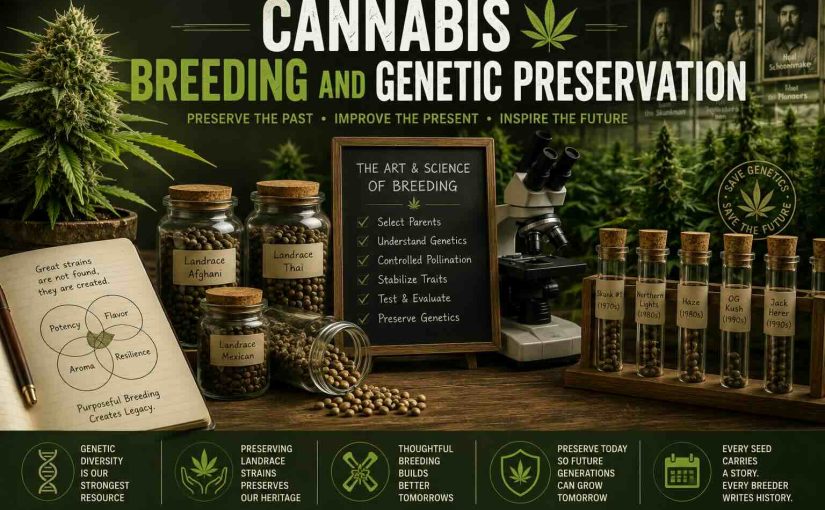
The Future of Cannabis Breeding and Genetic Preservation
Cannabis breeding became one of the most important parts of modern cultivation culture because breeders learned how strongly genetics influence plant structure, flowering behavior, resin production, terpene profiles, environmental resilience, and final harvest quality. Long before cannabis breeding became commercially visible, early breeders worked quietly to preserve and improve genetics through careful selection and experimentation.
Many legendary cannabis strains emerged because breeders spent years selecting parent plants with desirable traits. Stability, vigor, flowering speed, structure, aroma complexity, and adaptability all became important goals during the breeding process. Successful breeding required patience, observation, and a deep understanding of plant behavior.
Old-school breeders often worked under difficult conditions. Information traveled slowly, legal risks were significant, and cultivation knowledge was exchanged primarily through underground networks, magazines, and trusted grower communities. Despite these limitations, breeders managed to preserve important genetics that later shaped the modern cannabis market.
Landrace cannabis genetics played a major role in the development of many classic hybrids. Breeders collected and preserved genetics from different regions of the world, then experimented with crosses designed to combine desirable characteristics into more stable and productive plants.
Selective breeding eventually became increasingly sophisticated. Breeders learned to stabilize hybrids through multiple generations while selecting for resin production, terpene intensity, flowering time, environmental resilience, and overall plant consistency.
Modern cannabis breeding still depends heavily on observation and selection. Even with improved cultivation technology and broader genetic libraries, successful breeding requires patience, careful evaluation, and long-term planning.
Environmental management also became important because stable growing conditions help breeders evaluate plant traits more accurately. Lighting, temperature, airflow, nutrients, and humidity all influence phenotype expression during selection projects.
Today, cannabis breeding represents a combination of horticulture, agricultural science, genetic preservation, and cultural history. Modern breeders continue building on foundations created by earlier generations of cannabis pioneers.
Cannabis breeding became one of the most important parts of modern cultivation culture because breeders learned how strongly genetics influence plant structure, flowering behavior, resin production, terpene profiles, environmental resilience, and final harvest quality. Long before cannabis breeding became commercially visible, early breeders worked quietly to preserve and improve genetics through careful selection and experimentation.
Many legendary cannabis strains emerged because breeders spent years selecting parent plants with desirable traits. Stability, vigor, flowering speed, structure, aroma complexity, and adaptability all became important goals during the breeding process. Successful breeding required patience, observation, and a deep understanding of plant behavior.
Old-school breeders often worked under difficult conditions. Information traveled slowly, legal risks were significant, and cultivation knowledge was exchanged primarily through underground networks, magazines, and trusted grower communities. Despite these limitations, breeders managed to preserve important genetics that later shaped the modern cannabis market.
Landrace cannabis genetics played a major role in the development of many classic hybrids. Breeders collected and preserved genetics from different regions of the world, then experimented with crosses designed to combine desirable characteristics into more stable and productive plants.
Selective breeding eventually became increasingly sophisticated. Breeders learned to stabilize hybrids through multiple generations while selecting for resin production, terpene intensity, flowering time, environmental resilience, and overall plant consistency.
Modern cannabis breeding still depends heavily on observation and selection. Even with improved cultivation technology and broader genetic libraries, successful breeding requires patience, careful evaluation, and long-term planning.
Environmental management also became important because stable growing conditions help breeders evaluate plant traits more accurately. Lighting, temperature, airflow, nutrients, and humidity all influence phenotype expression during selection projects.
Today, cannabis breeding represents a combination of horticulture, agricultural science, genetic preservation, and cultural history. Modern breeders continue building on foundations created by earlier generations of cannabis pioneers.
Cannabis breeding became one of the most important parts of modern cultivation culture because breeders learned how strongly genetics influence plant structure, flowering behavior, resin production, terpene profiles, environmental resilience, and final harvest quality. Long before cannabis breeding became commercially visible, early breeders worked quietly to preserve and improve genetics through careful selection and experimentation.
Many legendary cannabis strains emerged because breeders spent years selecting parent plants with desirable traits. Stability, vigor, flowering speed, structure, aroma complexity, and adaptability all became important goals during the breeding process. Successful breeding required patience, observation, and a deep understanding of plant behavior.
Old-school breeders often worked under difficult conditions. Information traveled slowly, legal risks were significant, and cultivation knowledge was exchanged primarily through underground networks, magazines, and trusted grower communities. Despite these limitations, breeders managed to preserve important genetics that later shaped the modern cannabis market.
Landrace cannabis genetics played a major role in the development of many classic hybrids. Breeders collected and preserved genetics from different regions of the world, then experimented with crosses designed to combine desirable characteristics into more stable and productive plants.
Selective breeding eventually became increasingly sophisticated. Breeders learned to stabilize hybrids through multiple generations while selecting for resin production, terpene intensity, flowering time, environmental resilience, and overall plant consistency.
Modern cannabis breeding still depends heavily on observation and selection. Even with improved cultivation technology and broader genetic libraries, successful breeding requires patience, careful evaluation, and long-term planning.
Environmental management also became important because stable growing conditions help breeders evaluate plant traits more accurately. Lighting, temperature, airflow, nutrients, and humidity all influence phenotype expression during selection projects.
Today, cannabis breeding represents a combination of horticulture, agricultural science, genetic preservation, and cultural history. Modern breeders continue building on foundations created by earlier generations of cannabis pioneers.
Cannabis breeding became one of the most important parts of modern cultivation culture because breeders learned how strongly genetics influence plant structure, flowering behavior, resin production, terpene profiles, environmental resilience, and final harvest quality. Long before cannabis breeding became commercially visible, early breeders worked quietly to preserve and improve genetics through careful selection and experimentation.
Many legendary cannabis strains emerged because breeders spent years selecting parent plants with desirable traits. Stability, vigor, flowering speed, structure, aroma complexity, and adaptability all became important goals during the breeding process. Successful breeding required patience, observation, and a deep understanding of plant behavior.
Old-school breeders often worked under difficult conditions. Information traveled slowly, legal risks were significant, and cultivation knowledge was exchanged primarily through underground networks, magazines, and trusted grower communities. Despite these limitations, breeders managed to preserve important genetics that later shaped the modern cannabis market.
Landrace cannabis genetics played a major role in the development of many classic hybrids. Breeders collected and preserved genetics from different regions of the world, then experimented with crosses designed to combine desirable characteristics into more stable and productive plants.
Selective breeding eventually became increasingly sophisticated. Breeders learned to stabilize hybrids through multiple generations while selecting for resin production, terpene intensity, flowering time, environmental resilience, and overall plant consistency.
Modern cannabis breeding still depends heavily on observation and selection. Even with improved cultivation technology and broader genetic libraries, successful breeding requires patience, careful evaluation, and long-term planning.
Environmental management also became important because stable growing conditions help breeders evaluate plant traits more accurately. Lighting, temperature, airflow, nutrients, and humidity all influence phenotype expression during selection projects.
Today, cannabis breeding represents a combination of horticulture, agricultural science, genetic preservation, and cultural history. Modern breeders continue building on foundations created by earlier generations of cannabis pioneers.
Cannabis breeding became one of the most important parts of modern cultivation culture because breeders learned how strongly genetics influence plant structure, flowering behavior, resin production, terpene profiles, environmental resilience, and final harvest quality. Long before cannabis breeding became commercially visible, early breeders worked quietly to preserve and improve genetics through careful selection and experimentation.
Many legendary cannabis strains emerged because breeders spent years selecting parent plants with desirable traits. Stability, vigor, flowering speed, structure, aroma complexity, and adaptability all became important goals during the breeding process. Successful breeding required patience, observation, and a deep understanding of plant behavior.
Old-school breeders often worked under difficult conditions. Information traveled slowly, legal risks were significant, and cultivation knowledge was exchanged primarily through underground networks, magazines, and trusted grower communities. Despite these limitations, breeders managed to preserve important genetics that later shaped the modern cannabis market.
Landrace cannabis genetics played a major role in the development of many classic hybrids. Breeders collected and preserved genetics from different regions of the world, then experimented with crosses designed to combine desirable characteristics into more stable and productive plants.
Selective breeding eventually became increasingly sophisticated. Breeders learned to stabilize hybrids through multiple generations while selecting for resin production, terpene intensity, flowering time, environmental resilience, and overall plant consistency.
Modern cannabis breeding still depends heavily on observation and selection. Even with improved cultivation technology and broader genetic libraries, successful breeding requires patience, careful evaluation, and long-term planning.
Environmental management also became important because stable growing conditions help breeders evaluate plant traits more accurately. Lighting, temperature, airflow, nutrients, and humidity all influence phenotype expression during selection projects.
Today, cannabis breeding represents a combination of horticulture, agricultural science, genetic preservation, and cultural history. Modern breeders continue building on foundations created by earlier generations of cannabis pioneers.
Scientific information related to plant breeding, agriculture, crop genetics, and botanical research can be explored through the European Monitoring Centre for Drugs and Drug Addiction.
As cannabis cultivation continues evolving globally, breeding will likely remain central to the future of cannabis culture because genetics determine how plants perform across different climates, cultivation systems, and consumer preferences.
The legacy of early breeders continues shaping modern cannabis culture today through the preservation of stable genetics, classic hybrids, and breeding philosophies that influenced generations of growers worldwide.